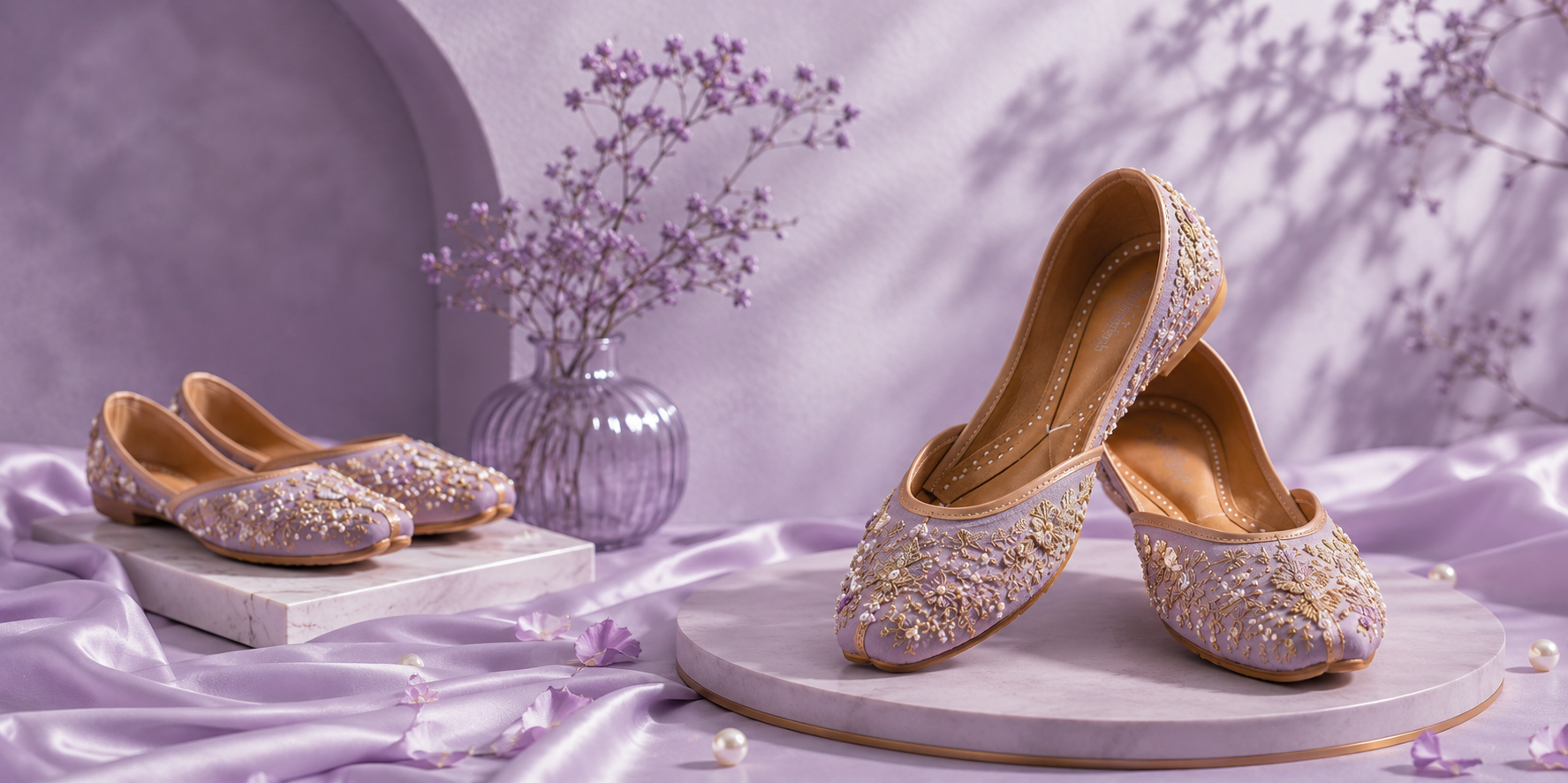
There's a common assumption that khussas belong to one kind of outfit — eastern, formal, occasion-only. Anyone who owns a pair knows better. The flat sole, the closed toe and the hand-worked upper make them one of the most adaptable shoes you can own, and the styling rules are simpler than you'd expect.
Start with the embroidery, not the colour
The instinct is to match your khussas to the dominant colour of your outfit. It's usually the wrong instinct. A heavily embroidered khussa competes with a heavily embroidered outfit, and the result is that neither is seen properly.
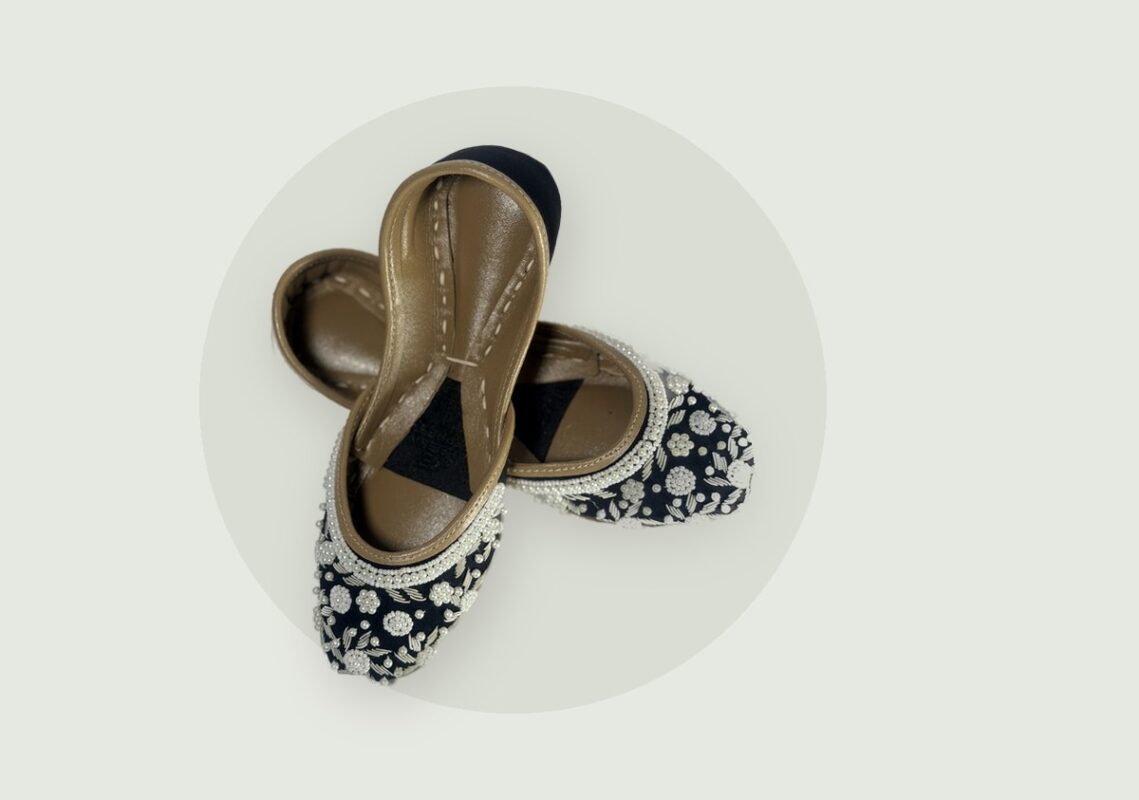
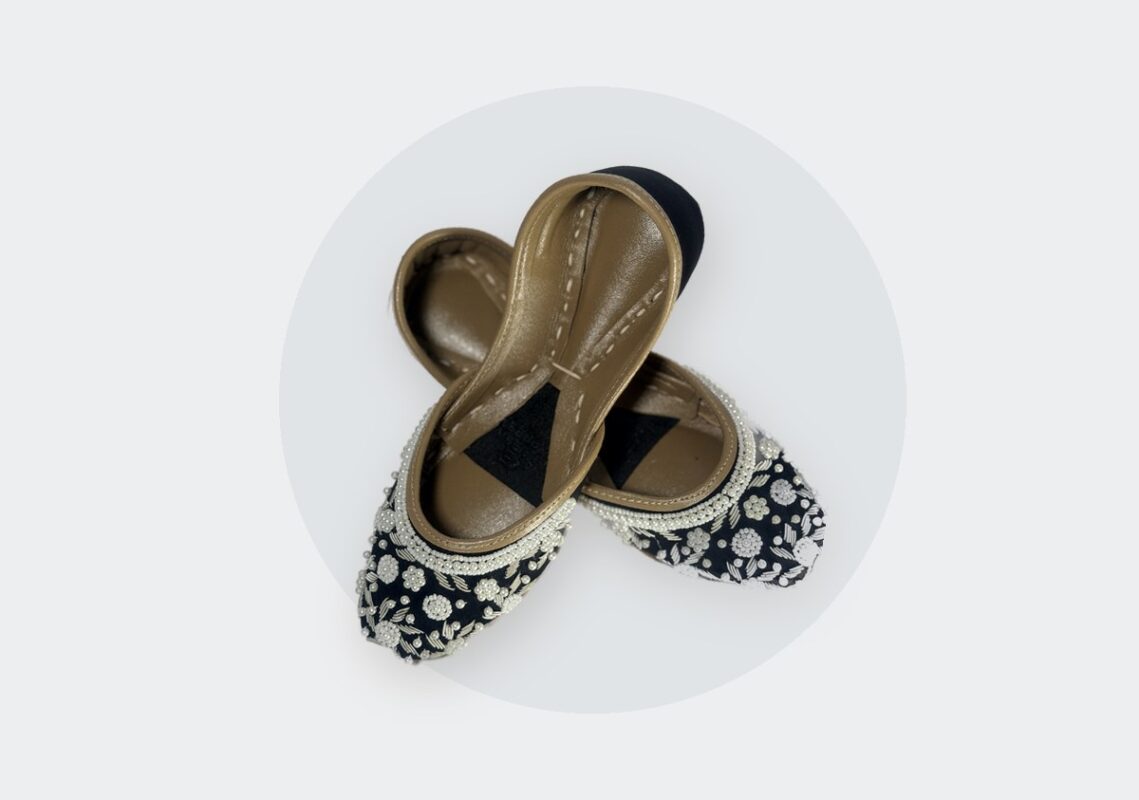
Work the other way around. If your outfit carries the detail — a worked neckline, a printed lawn, a bordered dupatta — choose a khussa with quieter handwork in a tonal shade. If your outfit is plain, let the shoes carry the interest. A white kurta with a pearl-work khussa is a better outfit than a worked kurta with the same shoe.
With eastern wear
Everyday kurta and trousers. A khussa in a neutral — beige, ivory, soft gold, black — reads as effortless rather than dressed-up. This is the pairing that gets the most wear.
Lawn and printed suits. Pull one of the quieter colours out of the print rather than the loudest. If the print has a gold thread running through it, a gold-worked khussa ties the whole thing together.
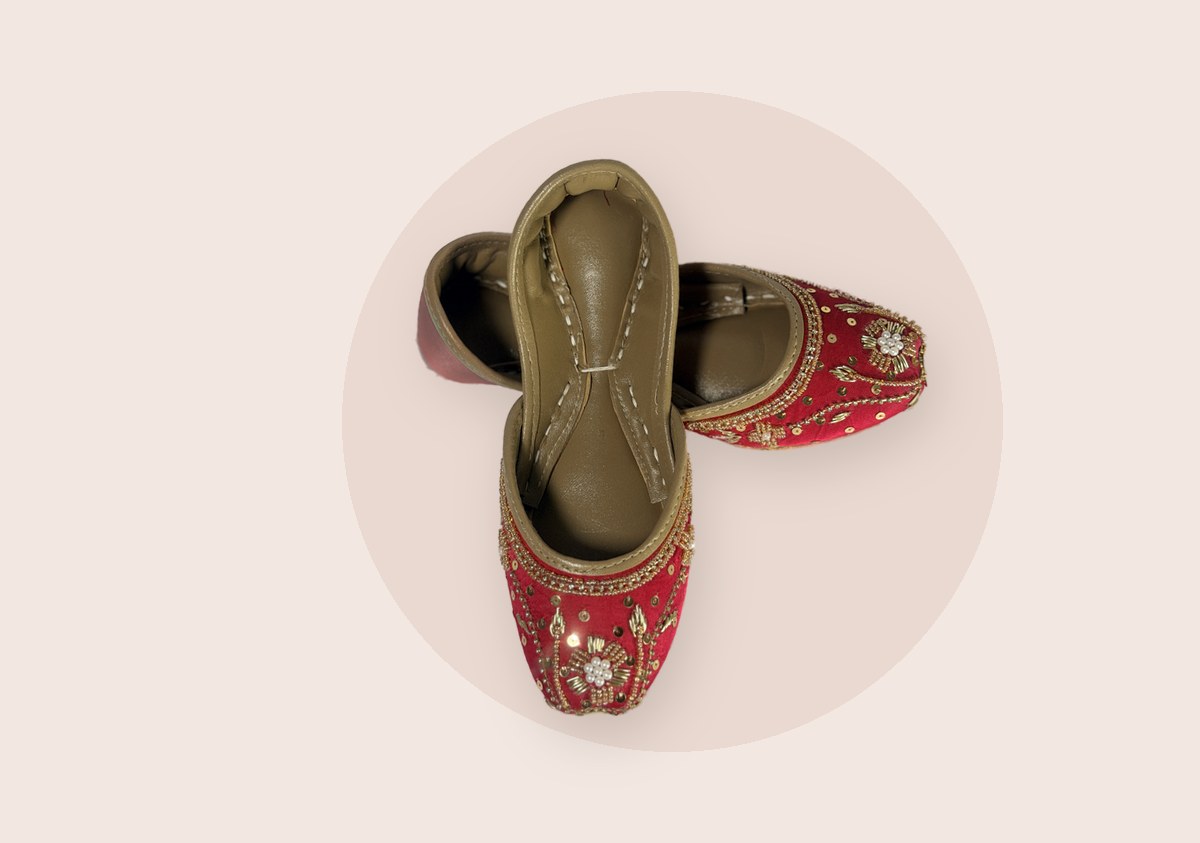
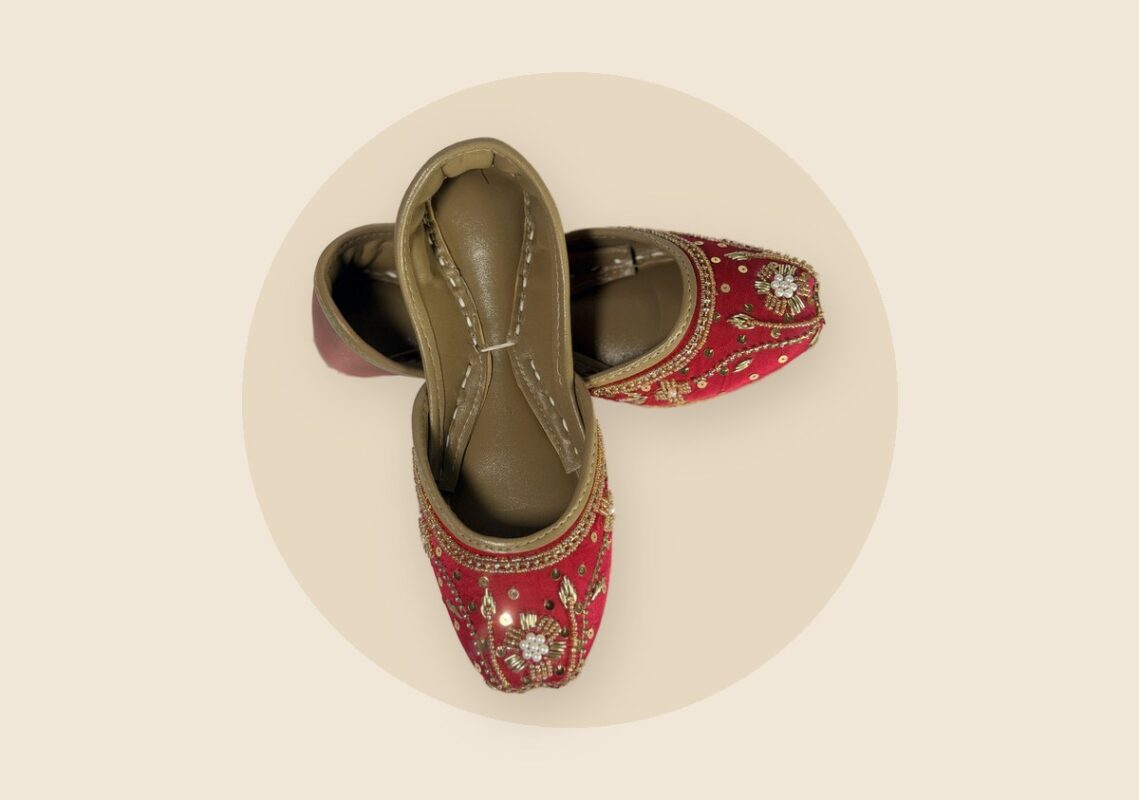
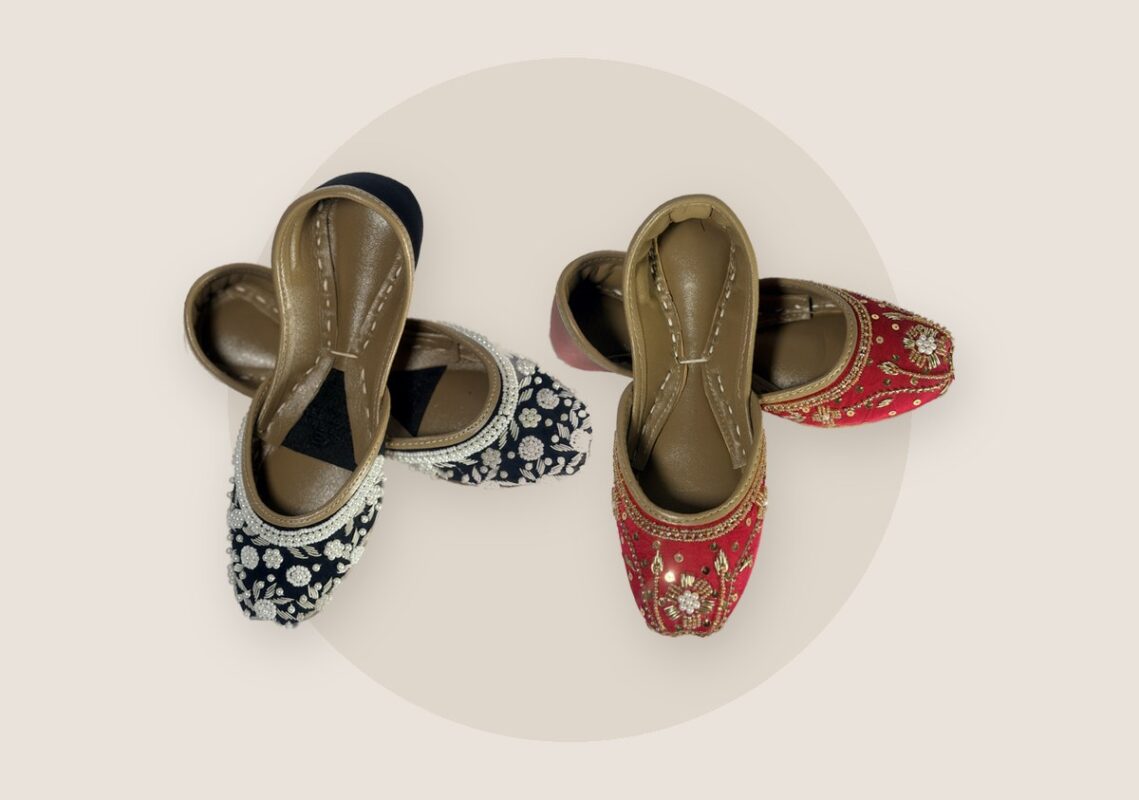
Formals and party wear. This is where a statement pair earns its place. Deep reds, blacks with pearl work, anything with dense embroidery.
Saris. Khussas work beautifully here and almost nobody tries it. The flat profile keeps the drape sitting correctly, which heels often disrupt.
With western wear
Straight-leg or wide-leg jeans. The single most underrated combination. The closed toe reads as polished where a sandal would read as casual. Roll the hem slightly so the shoe is visible.
Midi dresses and skirts. A flat shoe stops a midi from feeling formal. An embroidered khussa adds the texture that a plain ballet flat can't.
Linen trousers in summer. Neutral khussa, plain shirt, done.
What to avoid: skinny jeans tucked into the shoe, and anything cropped at the ankle in a way that cuts the leg line right where the shoe begins.
Three practical notes
Mind the sock question. Traditionally khussas are worn bare. If you need socks for comfort in winter, keep them invisible or tonal.
Watch the toe shape. A pointed khussa lengthens the leg and suits trousers. A rounder toe is softer and works better with fuller skirts and shalwars.
Give them a night out first. Handcrafted khussas soften with wear and mould to your foot. Wear a new pair around the house for an evening before an event.
The short version
Treat khussas as a flat shoe first and a traditional shoe second. Balance the detail, let one thing lead, and they'll go with far more of your wardrobe than you assumed.