Search for khussas online and you'll find pairs at wildly different prices that photograph almost identically. The difference isn't usually in the picture. It's in how the shoe was made, and it shows up about three weeks into owning it.
The sole is stitched, not glued
This is the clearest dividing line. A traditional khussa has its sole hand-stitched to the upper. A mass-produced one is glued.
Glue fails. It fails faster in heat, faster in humidity, and it fails suddenly — usually with the sole peeling away from the toe. Stitching doesn't fail that way. It wears slowly, and it can be repaired.
You can often see the stitching along the edge of the sole if you look. If the join is a smooth, seamless line with no visible thread, it's glued.
The embroidery is sewn, not printed or stuck
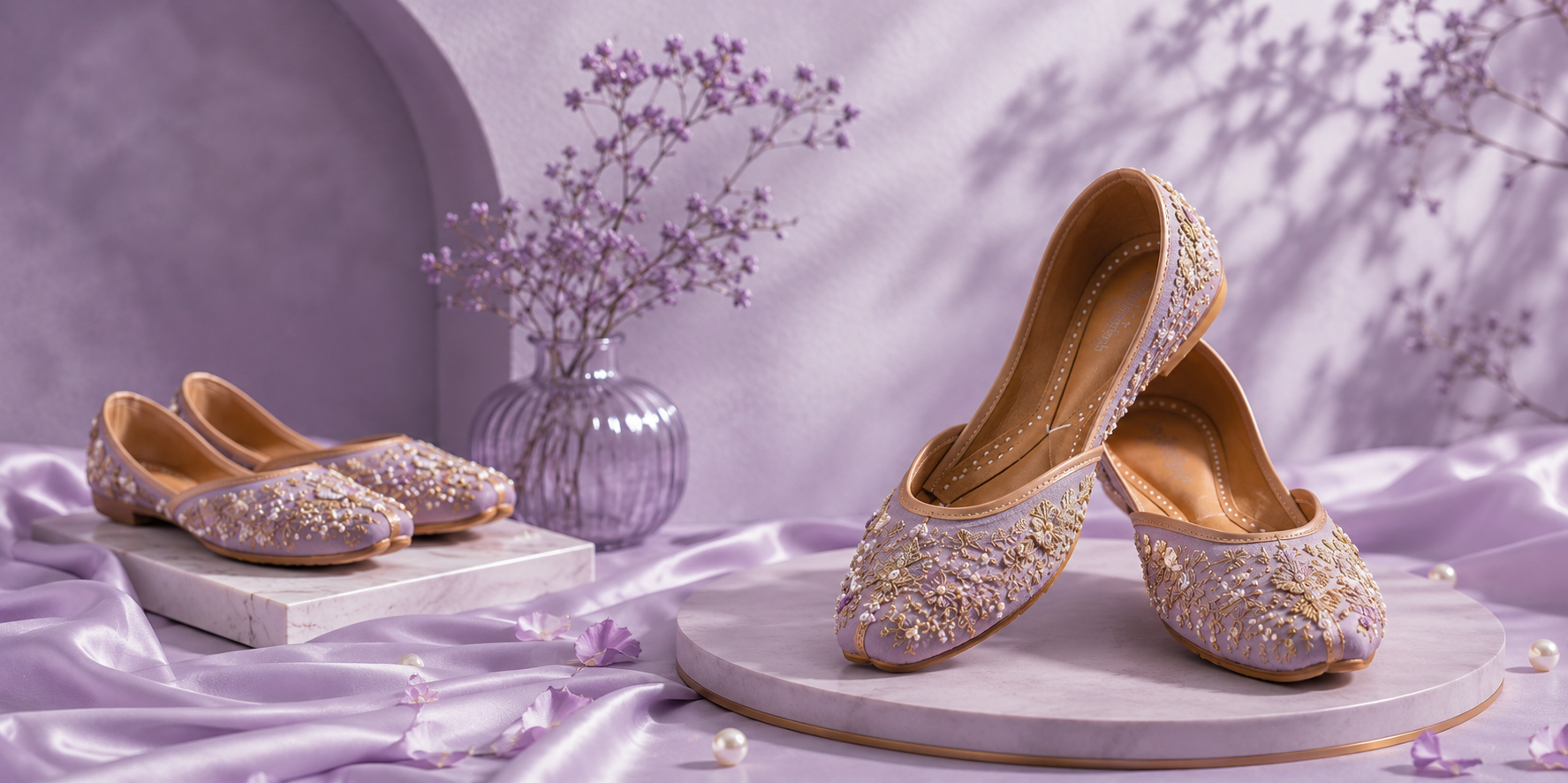
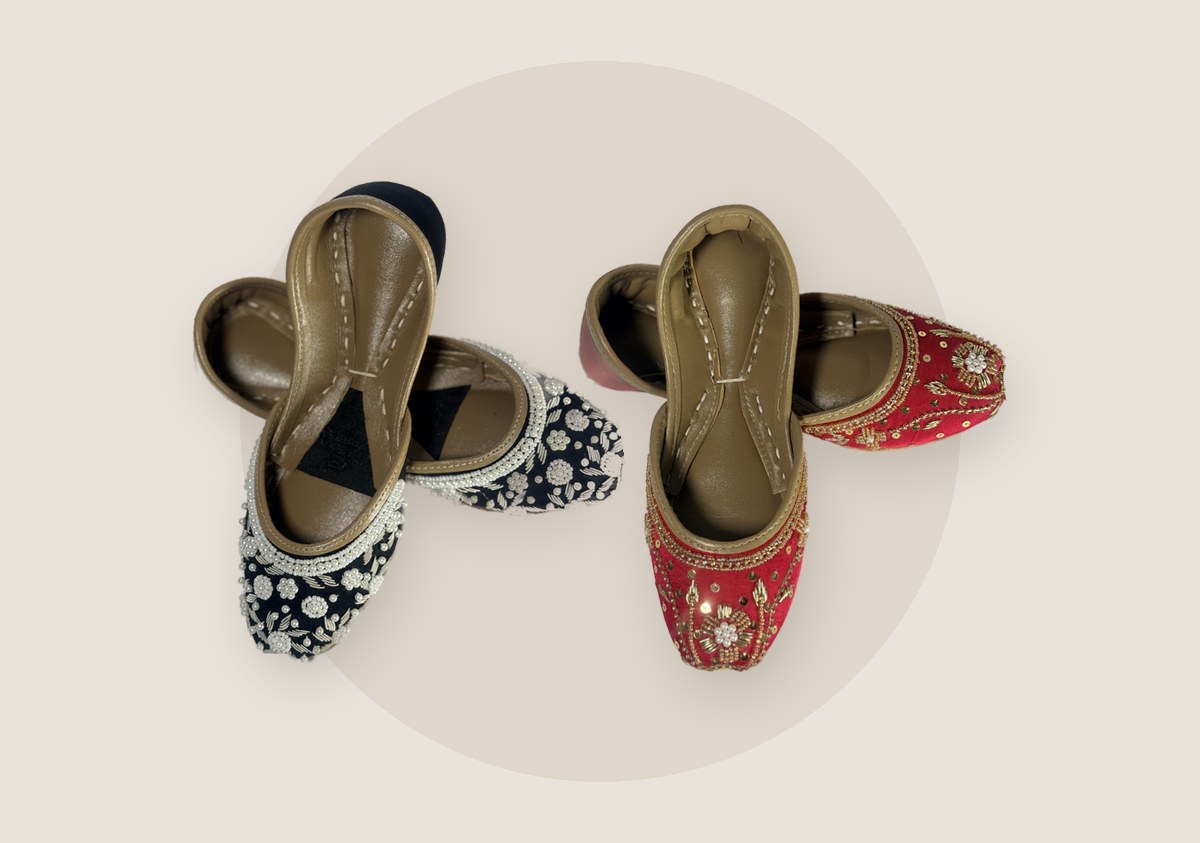
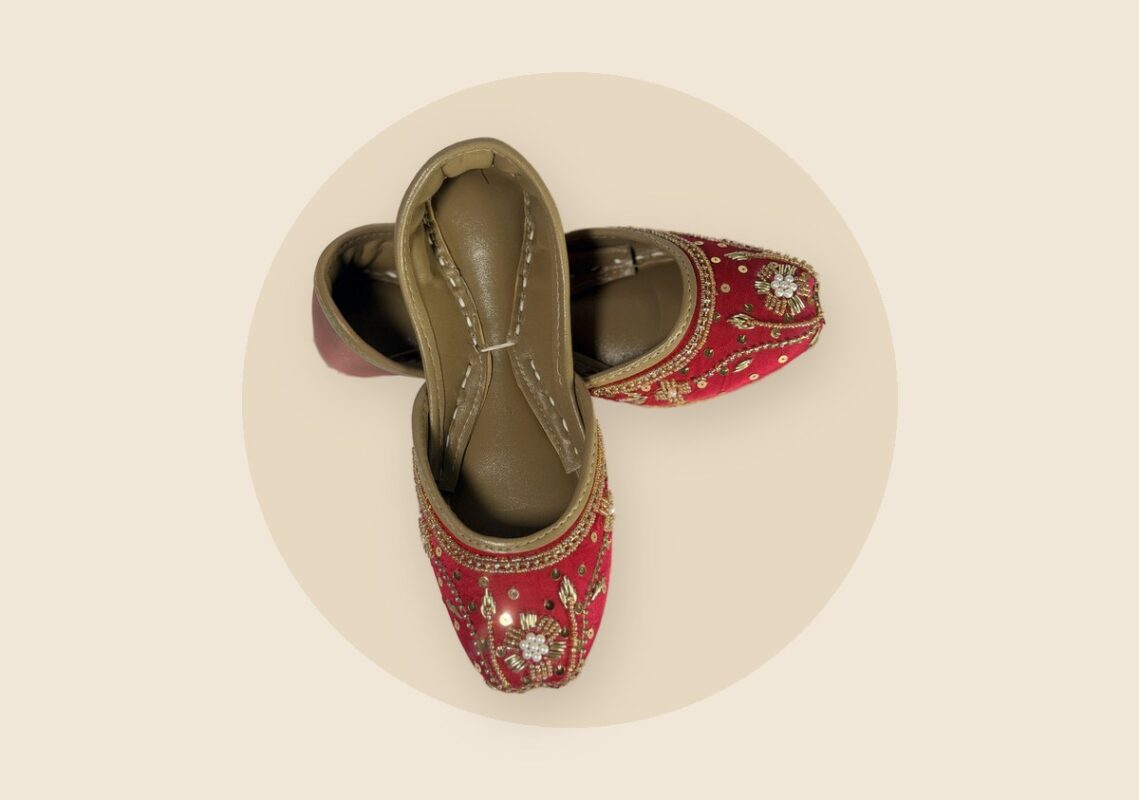
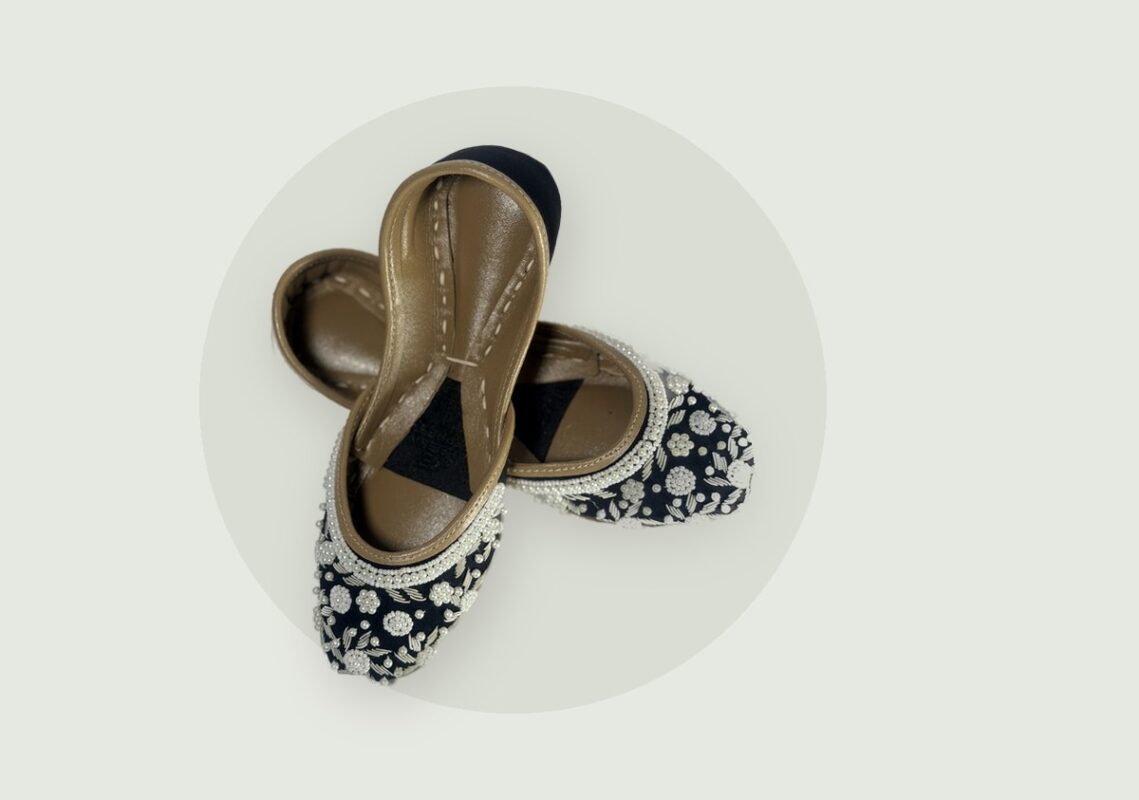
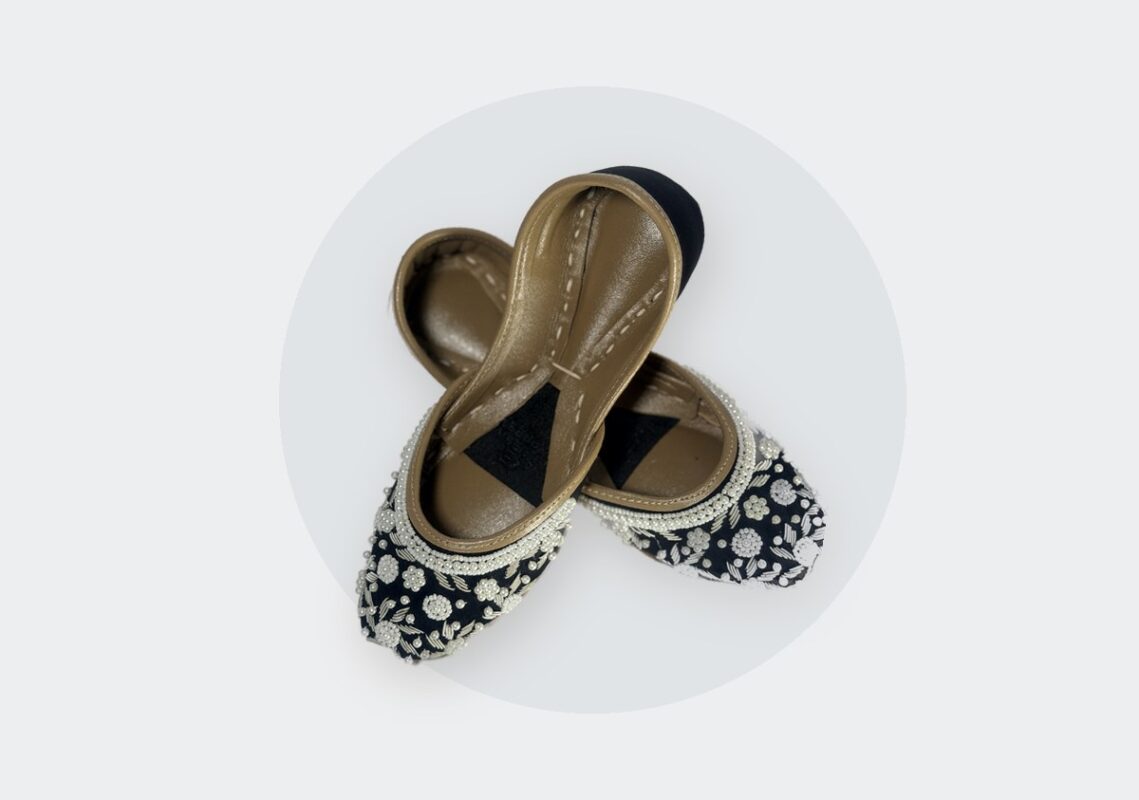
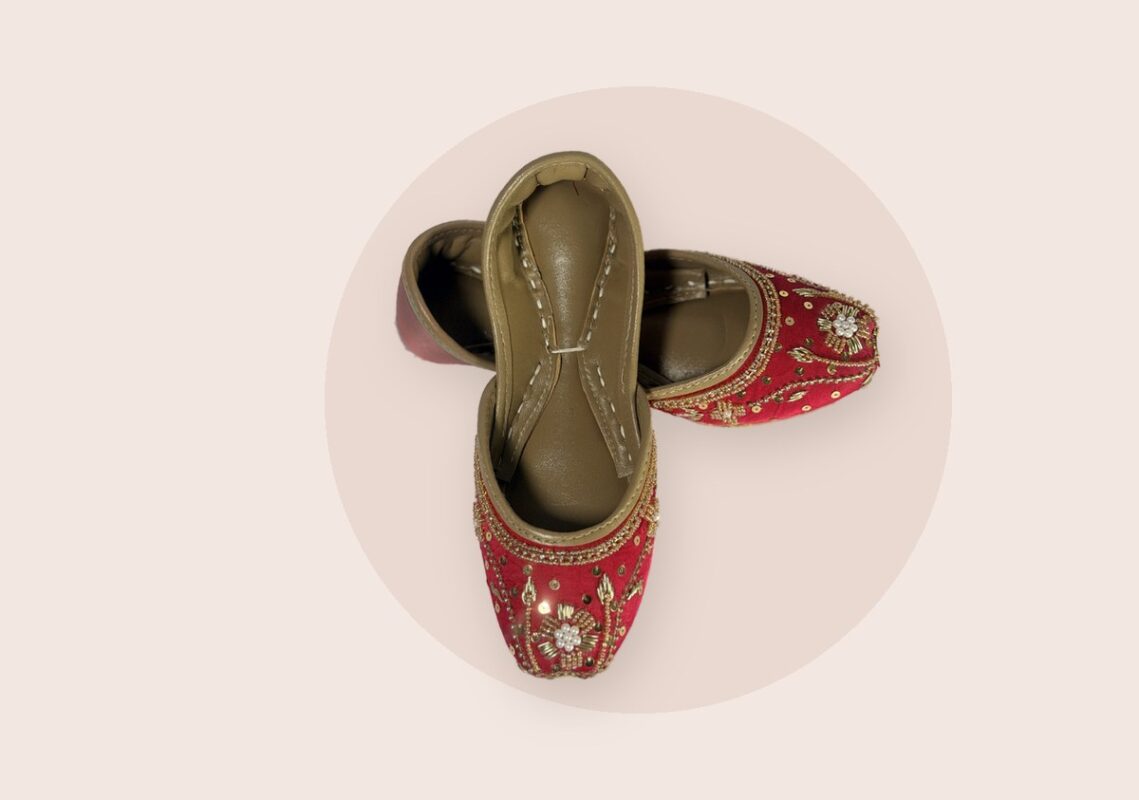
Real handwork means each bead, sequin and pearl is stitched on. It has physical depth — you can feel it under your fingers, and it catches light unevenly because no two beads sit at exactly the same angle.
Machine-applied or heat-transferred decoration sits flat, reflects light uniformly, and comes away in sheets rather than one bead at a time.
The tell in photographs: look at the shadows. Hand-stitched beadwork throws small individual shadows across the fabric. Flat decoration doesn't.
No two pairs are identical
A hand-embroidered khussa is worked by a person following a design, not a machine following a file. Small variations in bead placement between the left and right shoe of the same pair are normal, and variations between two pairs of the same design are guaranteed.
This is worth saying clearly because it's sometimes mistaken for a defect. It isn't. Perfect symmetry is the signature of a machine.
The lining is leather
A soft leather lining does two things a synthetic one can't: it breathes, which matters a great deal in Pakistani summers, and it moulds to the shape of your foot over the first few wears.
That moulding is why a good khussa is firm at first and increasingly comfortable afterwards — the shoe is adapting to you. A synthetic lining stays exactly the shape it was made in, which is why a cheap pair feels the same on day one as on day fifty, and never feels quite right.
It takes time
A single hand-embroidered pair takes hours of work — the upper embroidered first, then assembled, then the sole stitched on, then finished. Multiply that across an order and you understand why handmade pairs come in limited runs and why restocks aren't instant.
It's also why the price sits where it does. You're paying for hours of a craftsperson's time, not for materials.
What this means for you
A handmade khussa costs more at the start and less over its life. It breaks in rather than breaking down. It can be repaired. And it carries small marks of the person who made it, which a moulded shoe never will.
That's the whole argument for buying one, and it's the reason every pair we sell is made this way.