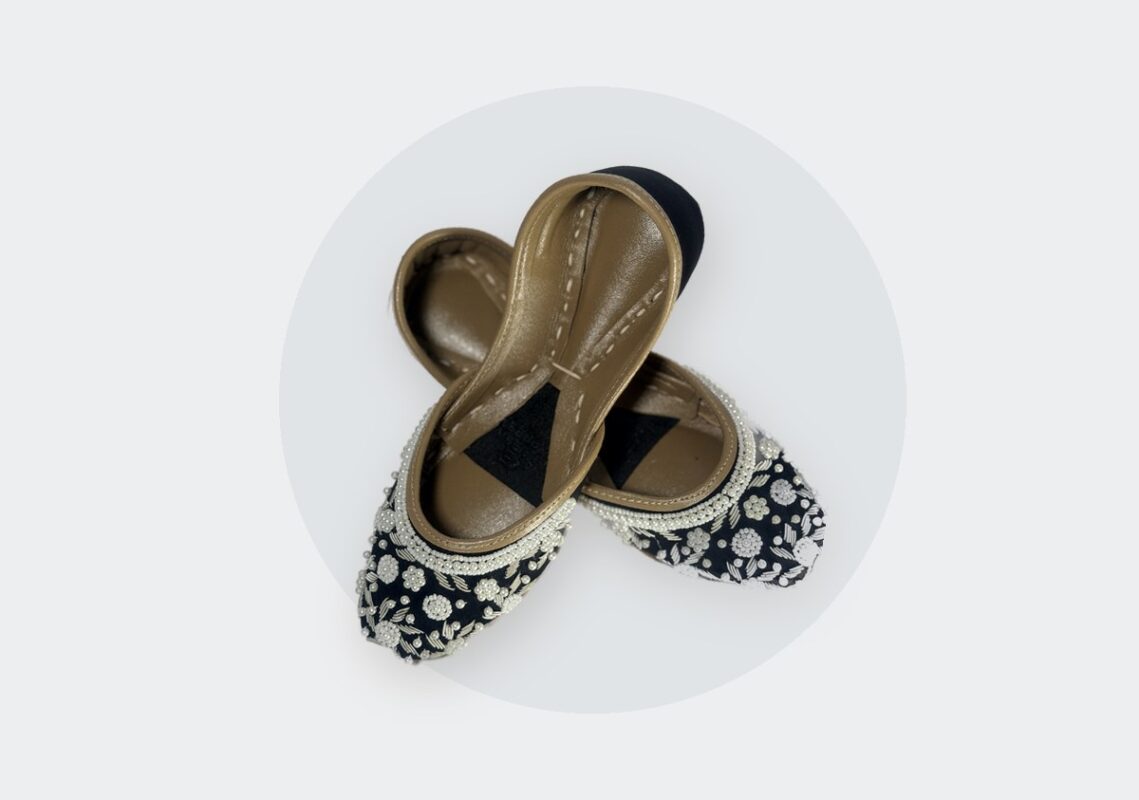
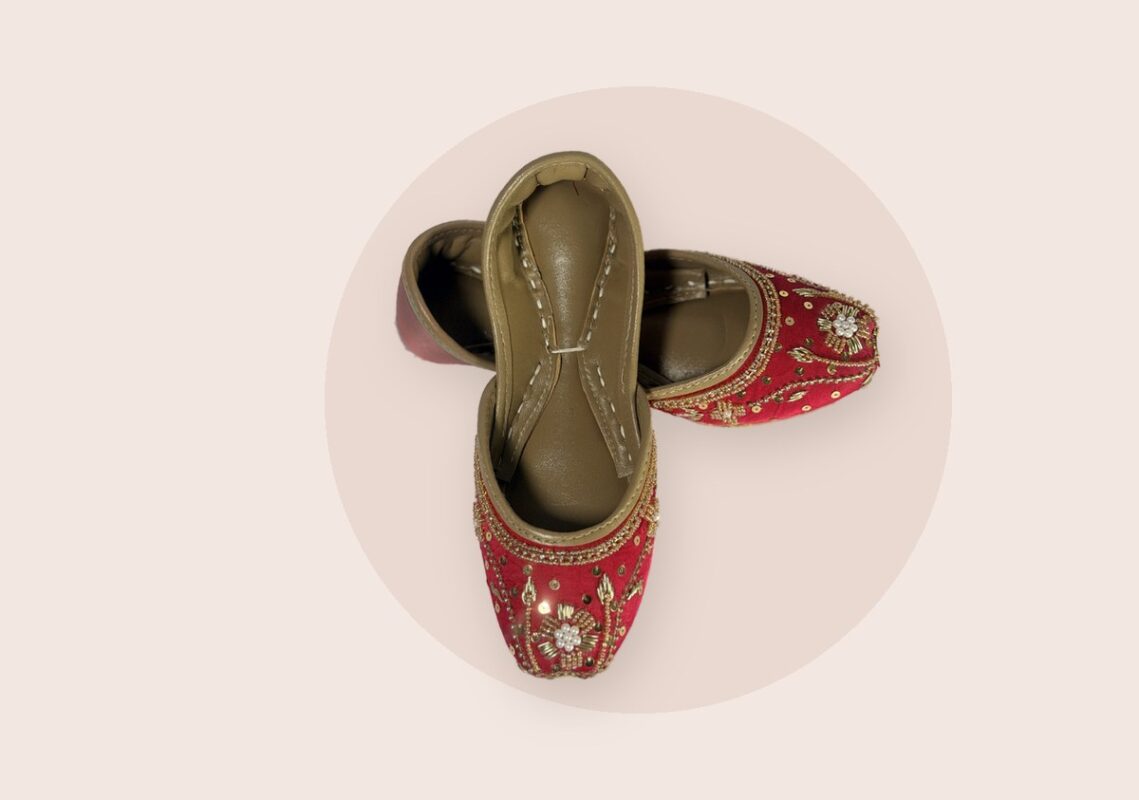
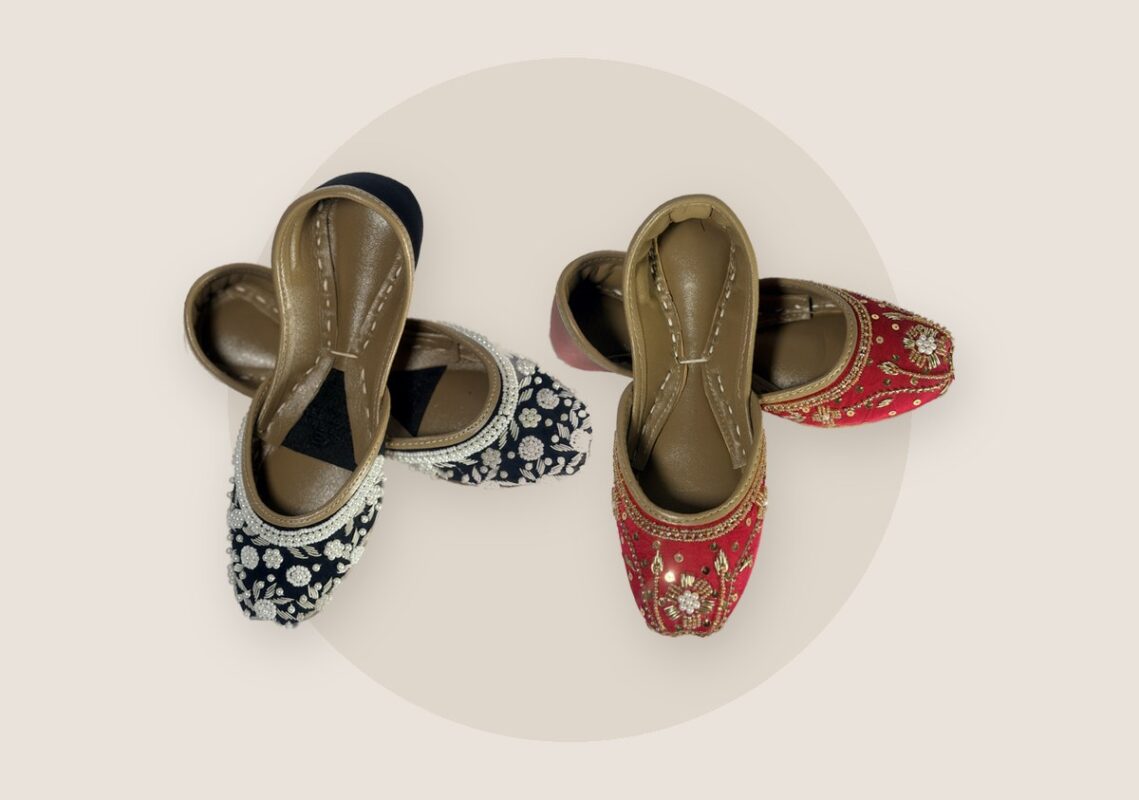
Wedding days in Pakistan are long. Between the getting-ready hours, the photographs, the entrance, the stage and the meal, most brides are on their feet — or at least in their shoes — for ten hours or more, often across multiple events in a single week.
Which is why the shoe deserves more thought than it usually gets.
Why khussas suit the day
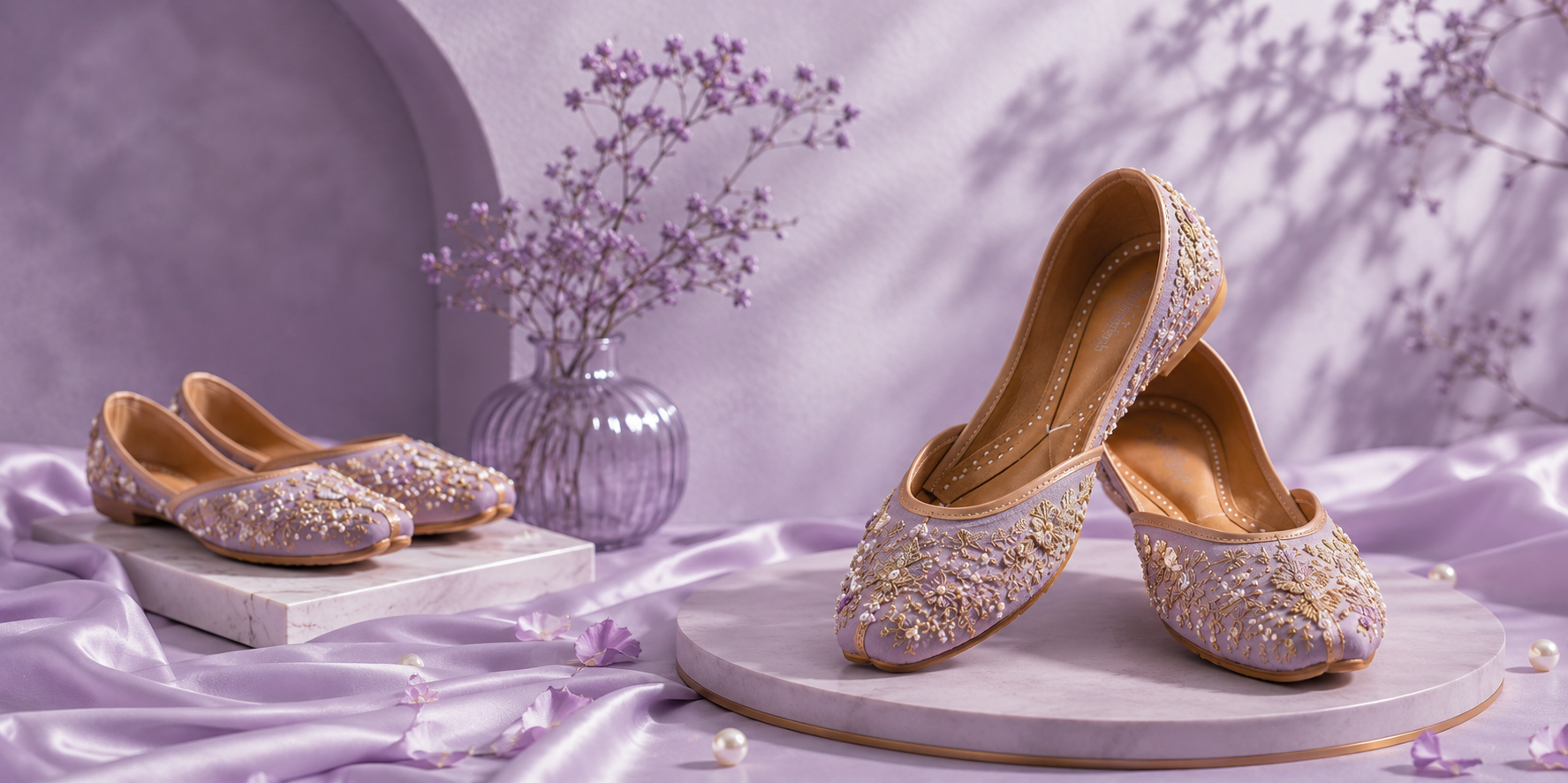
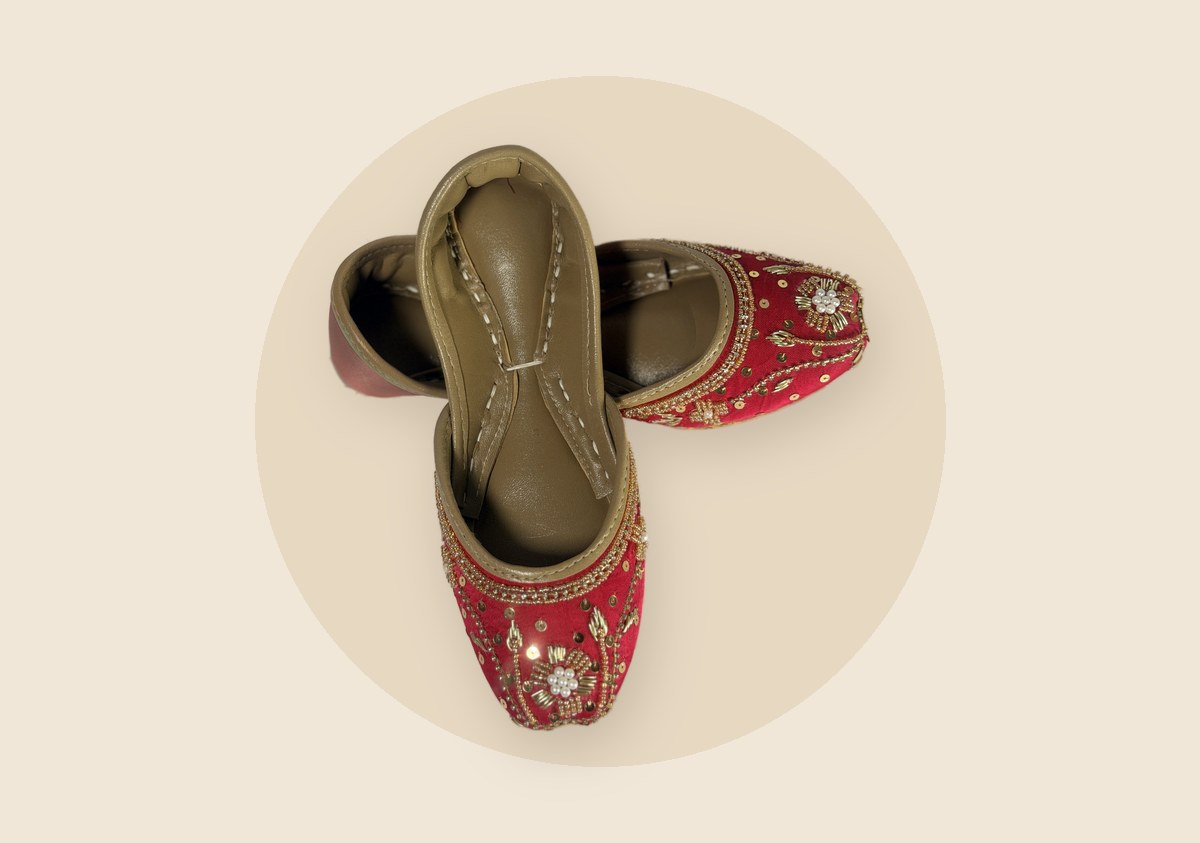
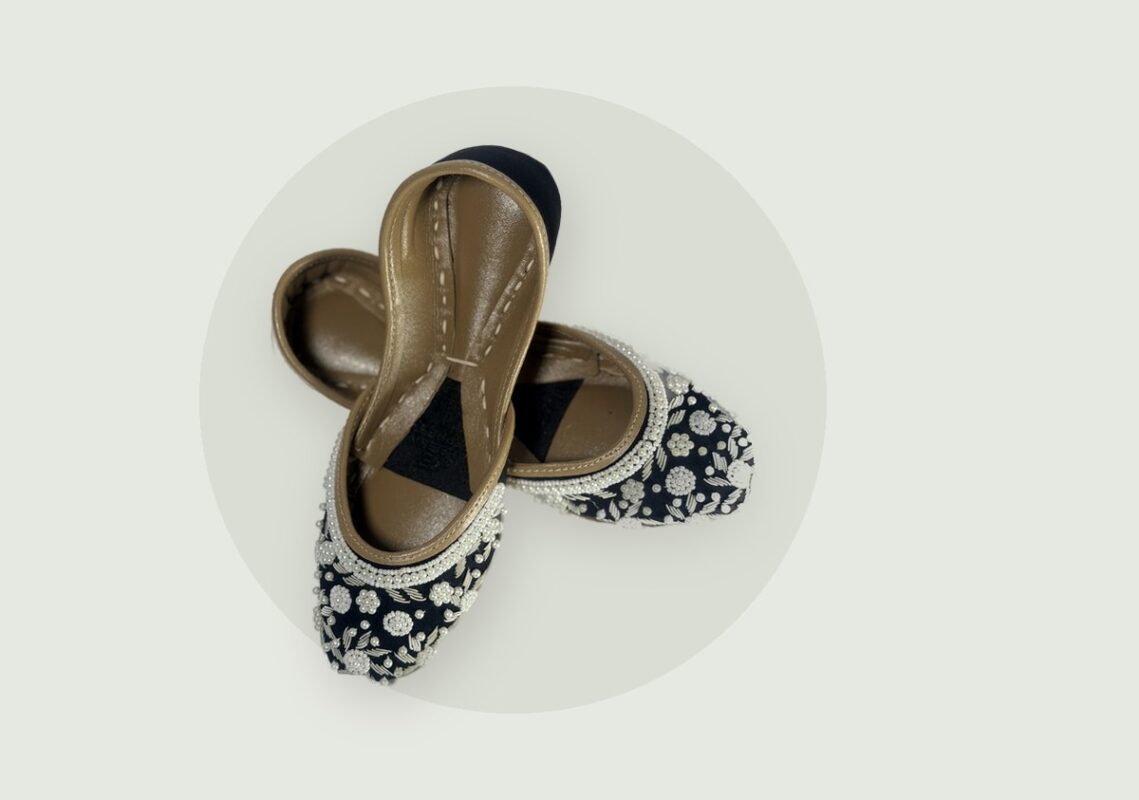
A flat, closed, hand-worked shoe solves several problems at once. There's no heel to sink into grass or catch on a lawn marquee. The closed toe protects your feet in a crowd. The flat sole means you can stand for the length of a photography session without your calves giving out. And the embroidery holds its own against a heavily worked outfit in a way a plain shoe simply can't.
Buy early
The most useful thing on this page: order at least three to four weeks before the event.
Handcrafted khussas need breaking in. They start firm and soften as the leather moulds to your foot, and that process takes several wears. A pair bought two days before the wedding will be a pair you're still breaking in at the wedding.
Ordering early also leaves room to exchange if the size isn't right. Ask about the exchange window before you order — ours is [X] days from delivery.
Getting the fit right
Measure both feet, in the evening. Feet swell through the day, and most people have one foot slightly larger. Use the larger measurement, taken at the end of the day rather than the start.
Size up if you're between sizes. A khussa that's marginally loose becomes comfortable as it softens. One that's marginally tight stays tight.
Account for the day itself. Long hours, warm halls and a lot of standing mean your feet will be a little larger by evening than they were at the morning fitting.
Breaking them in
Wear them for an hour or two indoors at a time, over a couple of weeks, on carpet or a clean soft floor. This softens the leather without marking the sole.
If a specific spot rubs, a thin strip of moleskin inside the shoe at that point works better than a plaster on your foot.
Don't try to speed this up with water or heat. Both damage the shoe, and neither works.
On the day
Bring a second pair. Not a compromise — a plan. A quieter, well broken-in khussa for the long stretches when nobody is photographing your feet.
Keep them off the floor before you leave. Dust and marks on an embroidered sole are hard to remove once ground in.
Have a small kit. Blister plasters, a soft cloth, and a needle with matching thread in case a bead works loose.
Choosing the design
Match the metal, not the colour. If your outfit's work is gold, a gold-worked khussa will sit correctly against it even in a completely different base colour. Silver and pearl work suit cooler-toned outfits.
Consider what will actually be visible. Under a heavy lehenga, only the toe shows — so put the budget into the toe work rather than the sides.
And take one photograph of the shoes with the outfit before the day. Colours behave differently under hall lighting than they do in daylight.