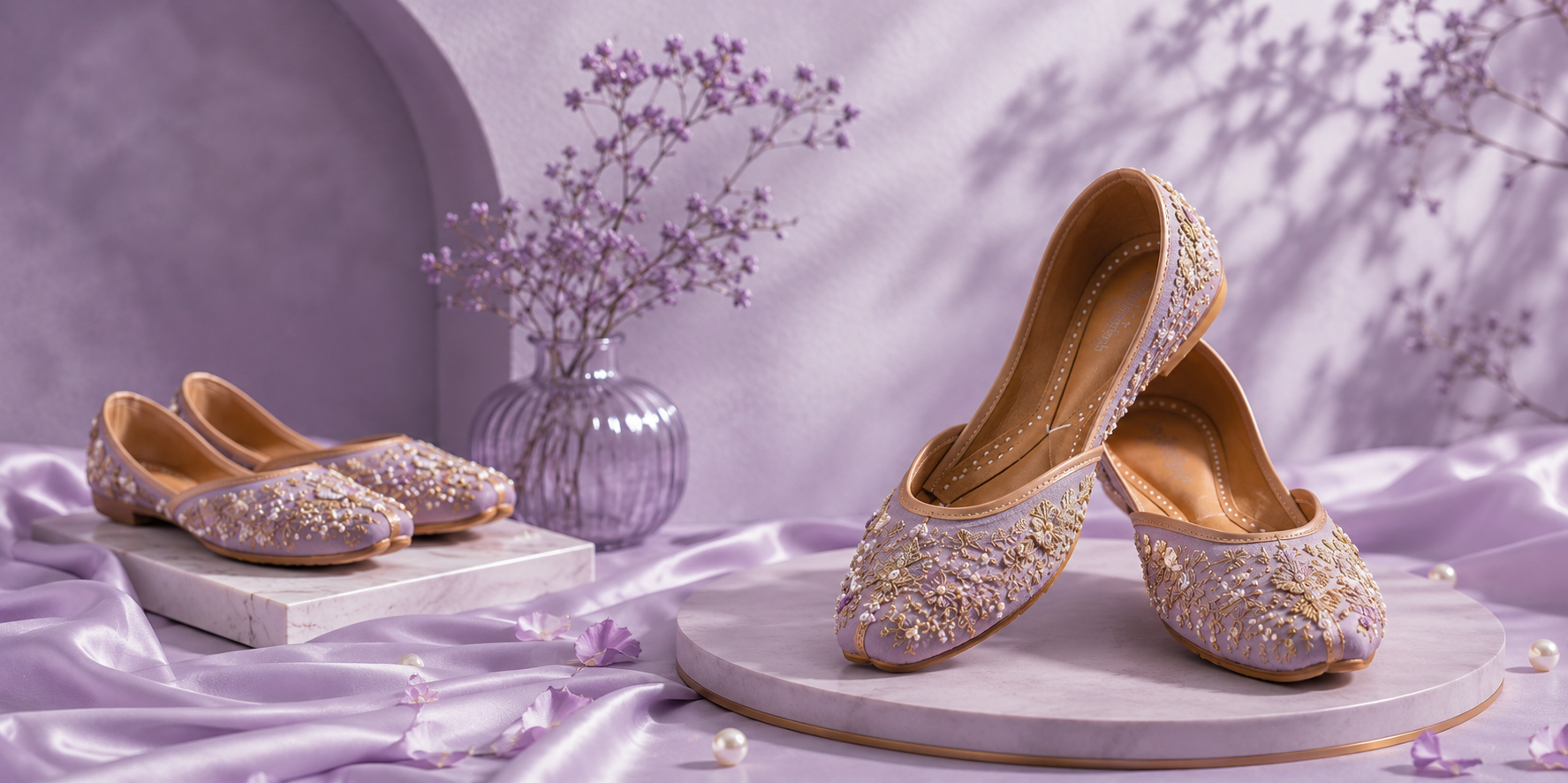
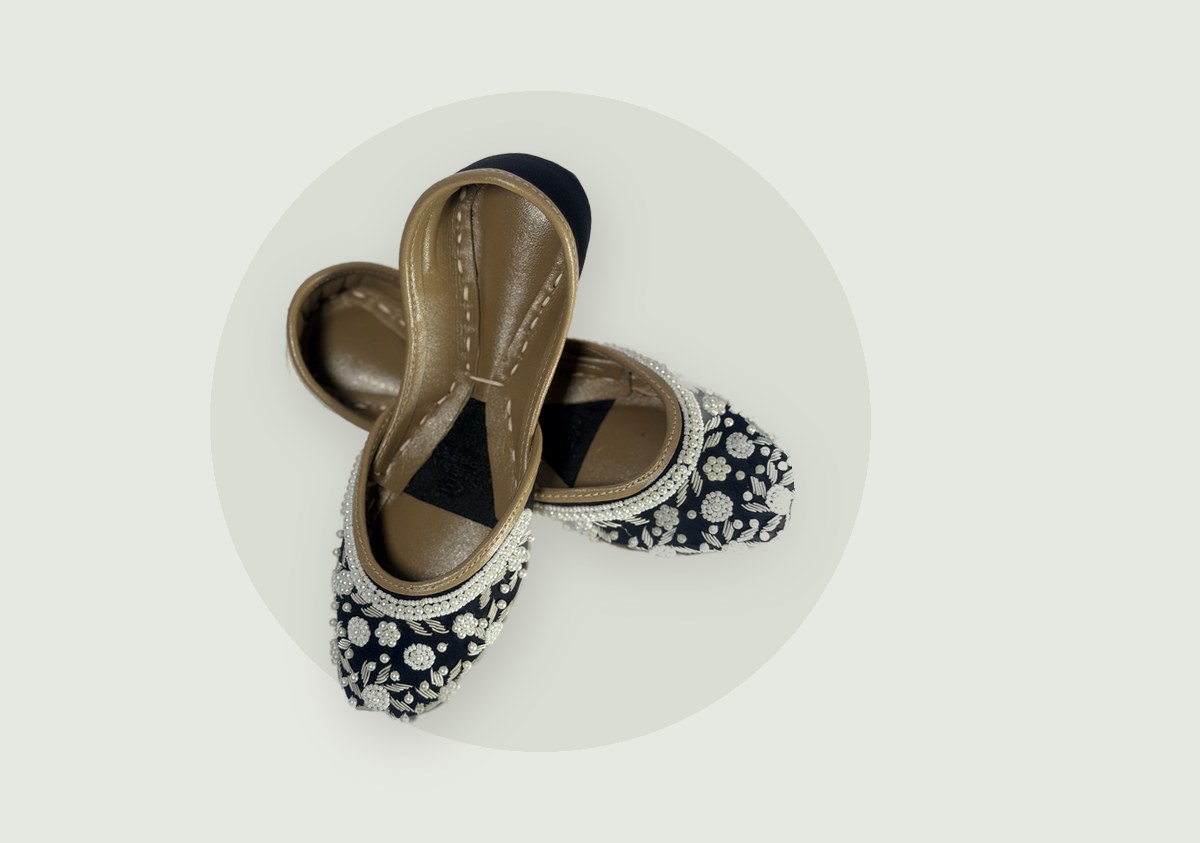
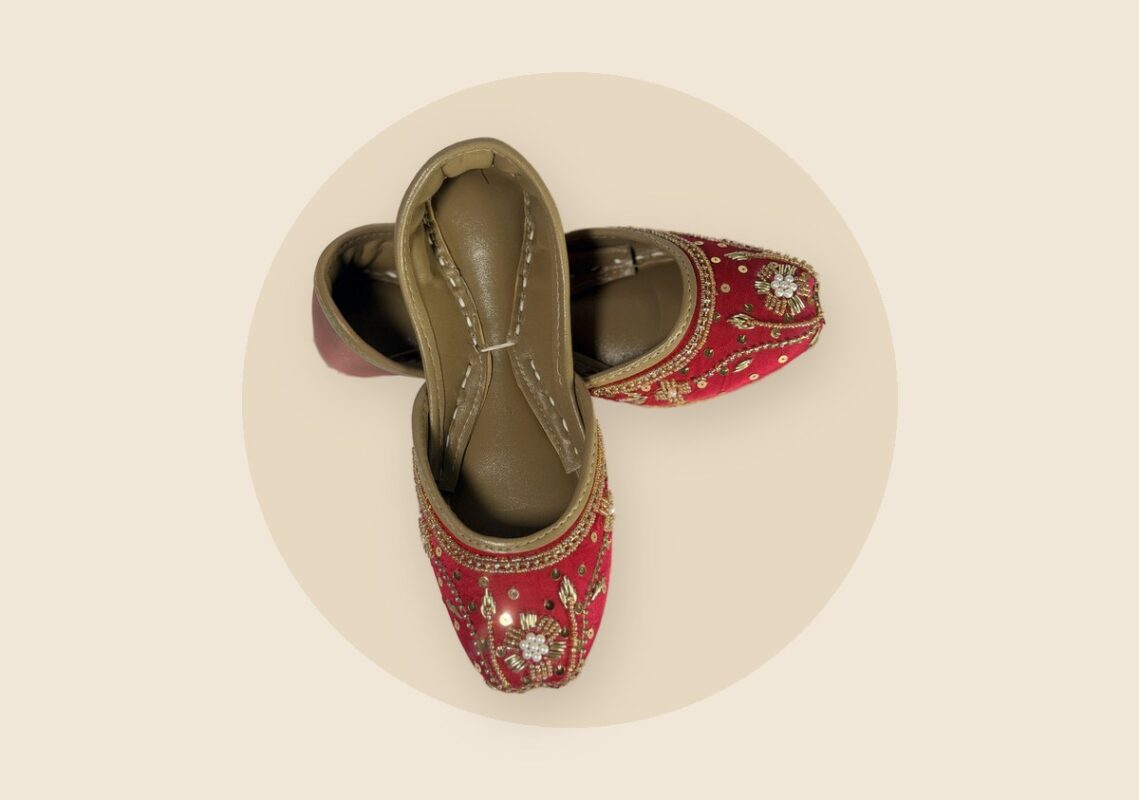
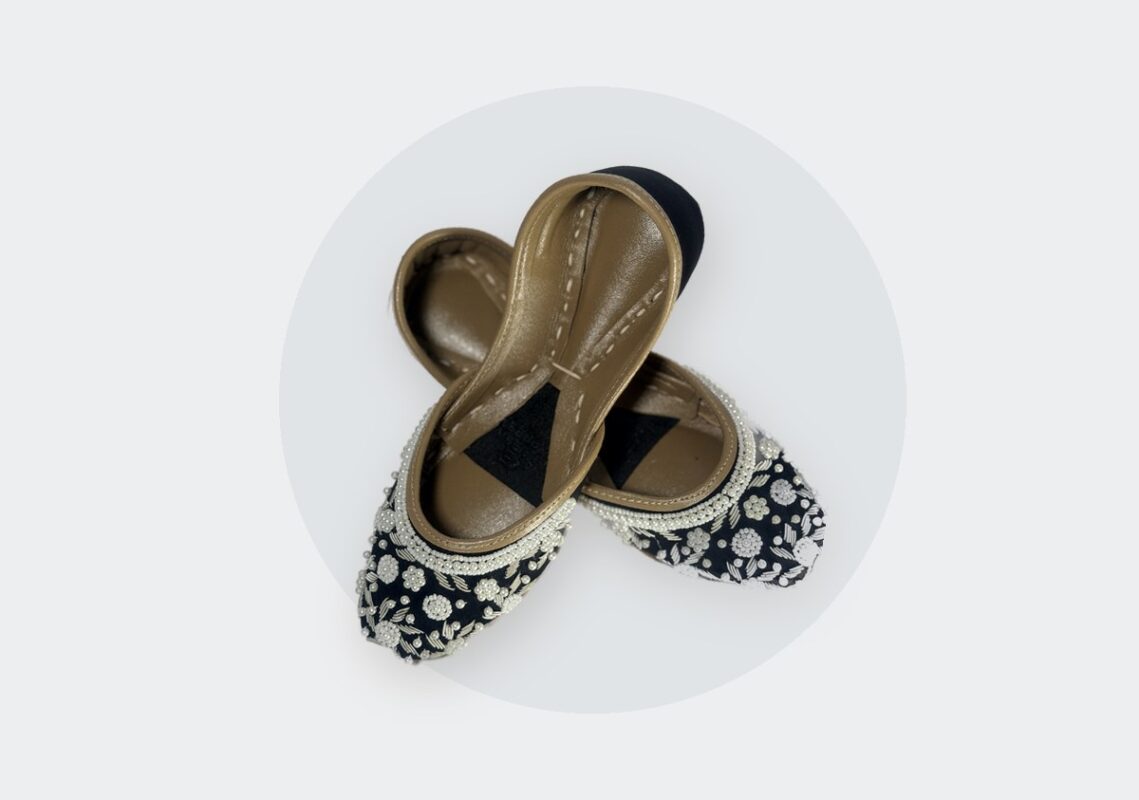
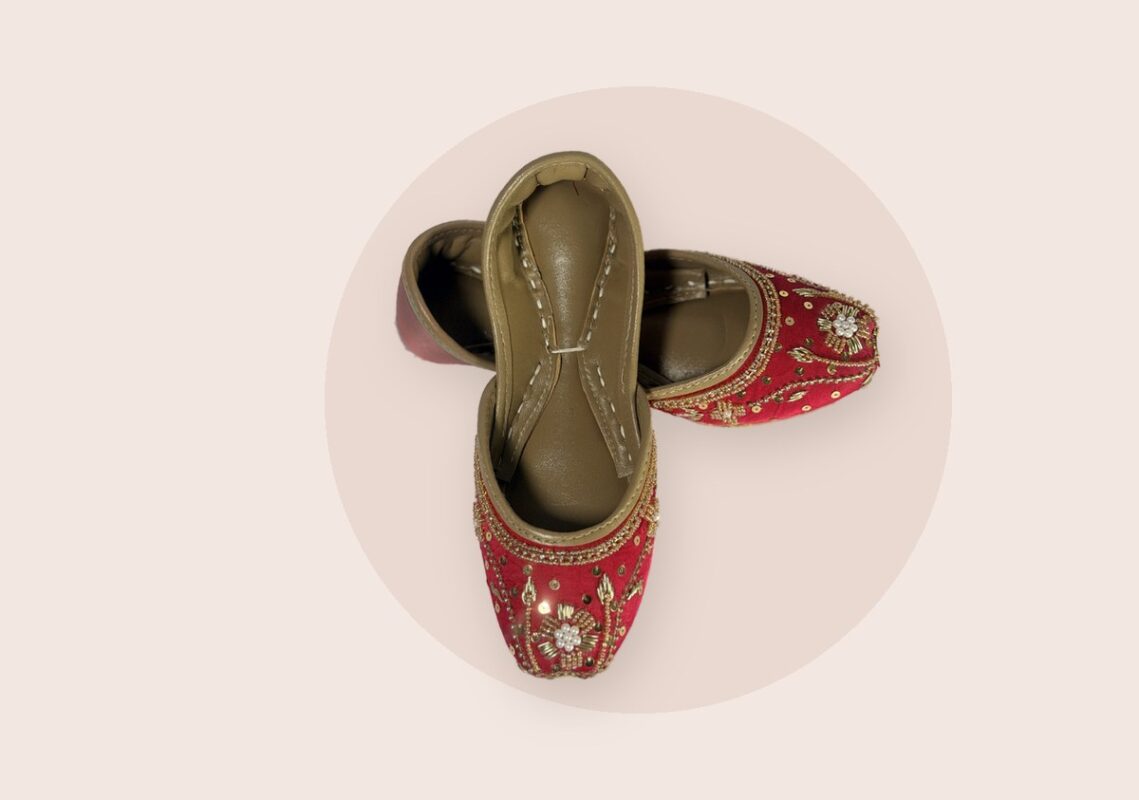
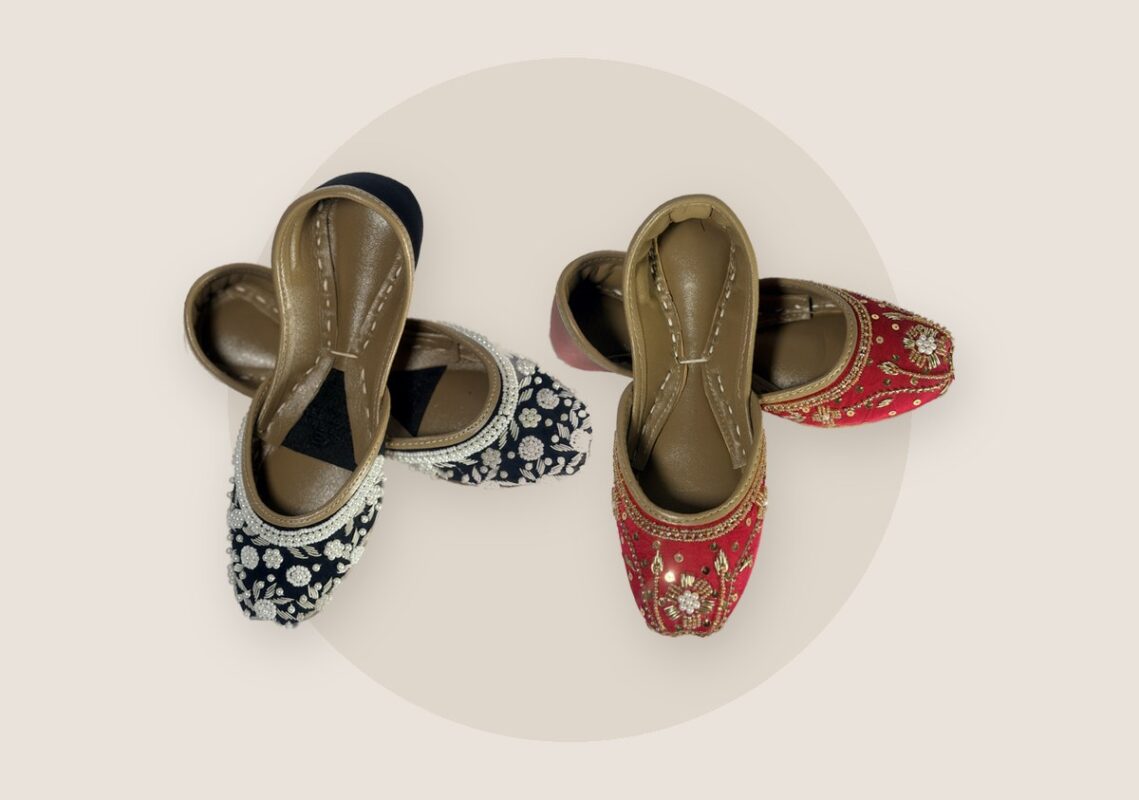
A hand-embroidered khussa is a different object from a factory shoe. The beads are stitched on individually. The sole is stitched, not glued. The lining is soft leather that responds to how it's treated. All of that is what makes the shoe worth owning — and it's also why a little care goes a long way.
None of this is difficult. It's mostly about what not to do.
The three things that damage khussas
Water. The single biggest cause of ruined pairs. Moisture loosens the stitching that holds beadwork, can stain fabric uppers permanently, and warps a leather sole as it dries. Never wash a khussa, never put one in a machine, and don't wear a good pair in the rain.
Direct sunlight. Prolonged sun fades dyed fabric and dulls metallic thread. A shoe left on a sunny windowsill for a summer will not be the same colour by autumn.
Pressure on the toe. Stacking heavy items on top of a khussa crushes the embroidered toe, and once beadwork is flattened it doesn't fully recover.
Cleaning
For everyday dust, wipe gently along the direction of the embroidery with a dry, soft cloth. A clean, dry make-up brush works well for getting between raised beadwork.
For a mark on a fabric upper, dab — don't rub — with a barely damp cloth, then let it air dry away from heat. Rubbing catches threads and pulls beads loose.
For the leather sole and lining, a dry cloth is enough. If the leather looks dry after heavy wear, the smallest amount of colourless leather conditioner on the lining will help, but keep it well away from the embroidered upper.
Never use: detergent, bleach, alcohol-based cleaners, or a hairdryer.
Storage
Keep each pair in its dust bag, in a cool, dry place out of direct light. If you don't have a dust bag, a soft cotton cloth is fine — the point is to keep dust off the handwork while letting the leather breathe. Avoid sealed plastic, which traps moisture.
For long storage, stuff the toe lightly with tissue to hold its shape. Store pairs flat and side by side, never stacked.
Wearing them well
Rotate between pairs rather than wearing one every day — leather needs time to dry out between wears.
Break a new pair in gradually. Handcrafted khussas start firm and soften considerably over the first few wears as the leather moulds to your foot.
If they get caught in rain, blot immediately with a dry cloth and let them dry at room temperature, away from any heat source. Drying leather quickly is what cracks it.
On loose beads
Occasionally a bead or sequin works loose. On hand-stitched work this is normal rather than a defect, and it's usually a two-minute fix with a needle and matching thread — catch it early, before neighbouring stitches loosen too.
If it happens soon after delivery, message us at whatsapp and we'll sort it out.
The short version
Keep them dry, keep them out of the sun, wipe gently, store in a bag. Do that and a good pair will outlast several seasons of ordinary shoes.